Friday, April 14, 2006

USA terrain in the 21st century


Our World and welcome to it. Posted by Picasa

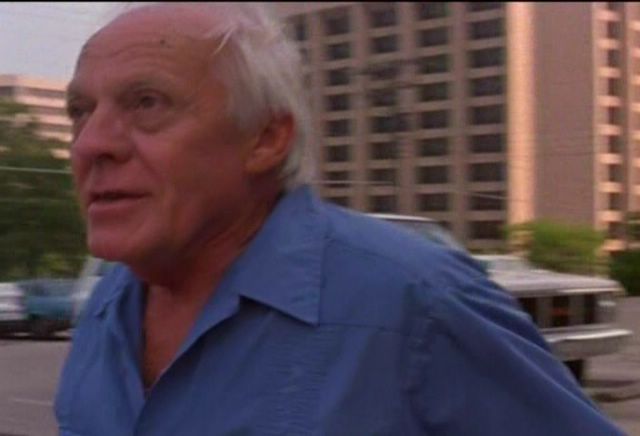
This photo is not exactly contingent with this post. I just thought it was a cool photo to add to my blog. Not sure who reads this blog, but it looks like my profile has been checked out 156 times, so somebody must be giving it a cursory glance. Well, sometimes I get lazy about posting. Sometimes just doing some of the mundane things you do during a day, is plenty enough to fill up one's time.

I was reading up on some Delay commentary , I think at Huffington Post, and came across the article at a gasp' socialist' web site.
Entitled: The resignation of Tom DeLay and the crisis of the US two-party system. By Patrick Martin, --- 7 April 2006.
It gets interesting for me at this paragraph:

"The DeLay resignation was followed by an outpouring of empty moralizing from top Democrats and Republicans, as well as the media, and suggestions that his departure marked the end of an era, bringing a halt to the period when well-heeled corporate lobbyists obtained seats at the legislative table in return for lavish gifts and campaign contributions. In many instances, lobbyists literally wrote the legislation that was then introduced by their congressional front-men."

Then it continues with:

"Corporate money has always called the shots in Washington, but the past quarter-century has seen a qualitative intensification of this process and the rise to power of a political underworld—thuggish operatives who employ vast sums of money and unscrupulous conspiratorial methods, bolstered by a servile and compliant media, to do the bidding of the super-rich.

The social roots of this phenomenon can be discerned by asking the elementary political question: who benefits? The past 25 years have seen a massive transfer of wealth from the vast majority of the American people—those who must work for a living—into the pockets of an already moneyed elite. The figures are by now well-established: in 1979, the top one percent owned about 20 percent of the national wealth; by 2004, that figure had more than doubled. The real incomes of most Americans have stagnated, while the incomes of corporate CEOs and the ruling elite have rocketed upwards.

This process has continued under Republican and Democratic presidents and Republican and Democratic Congresses, in recession and economic upswing, in war and peace. It is the fundamental socio-economic fact of modern America, although it is generally disregarded or mystified in the commentaries of the corporate-controlled media."

Furthermore the writer adds:

"Corruption is not an accidental or external aspect of this process, but rather lies at its very heart. The entire society, including its political institutions, is poisoned by the relentless drive to accumulate ever-greater private wealth in the hands of a narrow, privileged stratum.

Billionaires, of course, do not generally stoop to engage in congressional committee staff-work or legislative vote-counting. For this they employ political operatives, largely drawn from the more unscrupulous and backward sections of the middle class. (DeLay was the proprietor of a small pesticide distribution business before launching his political career.)

It is not surprising that those who choose to make their political career by assisting the wealthiest in society to grow even wealthier do not represent the highest type of human material. The occupation of providing ideological justifications for personal enrichment necessarily encourages the basest desires for profiteering and self-dealing at public expense. DeLay, Abramoff & Co. are not an aberration, but the logical outcome of the increasingly reckless and criminal plundering of the United States by the corporate elite and its two political parties."

I found this at WSWS . I don't necessarily subscribe to everything he says here, but, I think many ordinary Americans sense this is what has been going on. At some point the middle and working classes of this country are going to be hollowed out shells of their former selves, and the poltics of this country will get very strange. Even stranger than they are now.
Selah.

Tuesday, April 11, 2006

Came across this quote

I came across this quote:

"In some ways, you know, people that don't exist are much nicer than people that do."

---- Lewis Carroll.

Thursday, April 06, 2006

Tightening the Noose

There has been a lot of coverage about Tom Delay resigning, but I have been frustrated, in searching, and trying to find out exactly what the Justice Dept. investigations unit is actually doing, i.e. what are they up to in regards to Delay. Here is some of what I have been able to glean.
This is from Media Matters:

" On March 31, former DeLay deputy chief of staff and Abramoff associate Tony C. Rudy pleaded guilty to conspiring with Abramoff to commit fraud. In his plea agreement, Rudy admitted that while working in DeLay's House leadership office, "he received money and other things of value from or at the direction of Abramoff and others, including $86,000 in payments to Liberty Consulting [a firm founded by Rudy and run by his wife, Lisa Rudy], tickets to sporting events, meals, golf and golf trips. During the same period, defendant RUDY routinely performed official acts for or at the behest of Abramoff and others, which were motivated in part by the things of value he received."

Rudy's plea agreement also reportedly implicated former DeLay chief of staff and Abramoff associate Edwin A. Buckham, whom the agreement referred to as "Lobbyist B." According to the plea agreement, while Rudy was working in DeLay's office, "Liberty Consulting received payments for service to be performed by his wife. As Rudy knew, Lobbyist B shared some clients with Abramoff. Rudy made the arrangements for payments through Abramoff and Lobbyist B." In an April 5 article, The New York Times reported that Buckham "was among Mr. DeLay's closest associates, and the Justice Department is seeking to build a conspiracy case against him [Buckham], people involved in the case said."

see also: http://mediamatters.org/items/200604050009

Then we have this from the Washington Post:

" The pending resignation of former House majority leader Tom DeLay (R-Tex.), once one of the most powerful lawmakers in Washington, comes amid a federal criminal investigation that already has reached into his inner circle of longtime advisers.

The picture appeared to darken further last week. DeLay's former chief of staff Edwin A. Buckham, the lawmaker's closest political and spiritual adviser, was described in court documents filed by the Justice Department as someone who collaborated with the others -- Republican lobbyist Jack Abramoff, former DeLay deputy chief of staff Tony Rudy and former DeLay aide Michael Scanlon. They arranged payments, trips and favors that the department's investigators charged were part of an illegal conspiracy, according to the documents.

DeLay himself was formally designated as "Representative #2" in the documents, a title that cannot be considered a good omen. The lawmaker designated in the same documents as Representative #1 -- Rep. Robert W. Ney (R-Ohio) -- has been cited by the Justice Department as having received "things of value" for performing official acts.

DeLay and Buckham also have not been accused of wrongdoing by federal prosecutors, and they have both asserted their innocence.
But some of DeLay's official actions in Congress clearly fall within the scope of the continuing investigation: Last week's guilty plea by Rudy cites as part of the evidence of conspiracy a letter that DeLay wrote on behalf of an Abramoff client and legislation that DeLay supported on behalf of a client of Abramoff's firm.

The central legal challenge for DeLay is more likely to arise from the work of the federal task force, made up of FBI and tax agents, Interior Department investigators, and prosecutors from the Justice Department's public integrity unit. A grand jury subpoena issued by the FBI in February for records of the U.S. Family Network, a nonprofit group formed by Buckham, specifically asked for any documents related to DeLay; his wife, Christine; Buckham's lobbying firm; Rudy; and a variety of contributors to the group from among Abramoff's client list."


Ah, well, here we get at some of the kernal of a possible case they are building against Delay. But, in Sugarland this is hardly mentioned at all.
Delay prefers to portray all his problems as the liberal medias fault, and as due to what he refers to as, a ' War on Christianity'.

Actually what he has to worry about are - - " the federal task force, made up of FBI and tax agents, Interior Department investigators, and prosecutors from the Justice Department's public integrity unit."

One can only suppose he jumped ship early, to 1) avoid another indictment while in office, and 2) start assembling a larger legal team.

Meanwhile like the Dark tower of Sauron in Morder, a lot of his power has come crashing to the ground. Sic transit Mundus.

The quoted paragraphs are from a larger article by- R. Jeffrey Smith Washington Post Staff Writer, at the Washington Post.

Saturday, April 01, 2006

The Beatles: The Biography -- by Bob Spitz

Well, I realize I haven't posted for a while. Have been doing a lot of genealogical research, and I get carried away with this.

Meanwhile at the local library, I picked up The Beatles: The Biography -- by Bob Spitz. Here is the capsule review from Library Journal:

"Surprisingly, relatively few of the hundreds of Beatles books over the years comprehensively document the band's story. Spitz (Dylan: A Biography) claims to have written the definitive work, and it is certainly far more detailed than Philip Norman's Shout!, the last serious attempt by an outsider to tell the Beatles' tale. Spitz spent several years cobbling together the story from new interviews with old Beatle friends and hundreds of existing sources (including discredited John Lennon biographer Albert Goldman's archives, which may raise eyebrows). The band's family histories and early years are told with flair and fairness in unprecedented depth-this is the book's biggest contribution to Beatles scholarship. But once Beatlemania hits, Spitz loses steam: the group doesn't even invade America until well over halfway through the narrative. As familiar stories of the Beatles' prime years take over, sloppy, head-scratching errors start to creep in; certain stories ingrained in Beatles legend, such as how they arrived at the finished recording for "Strawberry Fields Forever," are ignored. With the band sinking into dysfunction, Spitz relies more heavily on sources that take a negative tone, and the book sputters to an abrupt end, ignoring the lawsuit that Paul McCartney filed against the others to dissolve their partnership formally. Despite these flaws, The Beatles emerges as the most complete chronicle of the Fab Four to date, at least until Mark Lewisohn finishes his massive three-volume Beatles biography in 2016."

I haven't finished it, but tend to agree with this review. It is hard to put down when it is describing the childhood of the Beatles, the Quarrymen, and the Hamburg era, but it does seem to run out of steam as it gets towards 1966 thru 1969. Still, the first part of the book is fascinating, and it does explore the Beatles, as a phenomena, pretty thoroughly.

Wednesday, March 15, 2006

Chain of Command excerpt

I came across this fascinating passage when reading Chain of Command by Seymour Hersh. It was also posted on the online NewYorker in 2004. But since this passage really illuminated something for me, I thought I would post it here. Okay, here is this:

SEYMOUR M. HERSH ---the New Yorker
Issue of 2004-06-28Posted 2004-06-21

"In July, 2003, two months after President Bush declared victory in Iraq, the war, far from winding down, reached a critical point. Israel, which had been among the war’s most enthusiastic supporters, began warning the Administration that the American-led occupation would face a heightened insurgency—a campaign of bombings and assassinations—later that summer. Israeli intelligence assets in Iraq were reporting that the insurgents had the support of Iranian intelligence operatives and other foreign fighters, who were crossing the unprotected border between Iran and Iraq at will. The Israelis urged the United States to seal the nine-hundred-mile-long border, at whatever cost.

The border stayed open, however. “The Administration wasn’t ignoring the Israeli intelligence about Iran,” Patrick Clawson, who is the deputy director of the Washington Institute for Near East Policy and has close ties to the White House, explained. “There’s no question that we took no steps last summer to close the border, but our attitude was that it was more useful for Iraqis to have contacts with ordinary Iranians coming across the border, and thousands were coming across every day—for instance, to make pilgrimages.” He added, “The questions we confronted were ‘Is the trade-off worth it? Do we want to isolate the Iraqis?’ Our answer was that as long as the Iranians were not picking up guns and shooting at us, it was worth the price.”

The warnings of increased violence proved accurate. By early August,[2003] the insurgency against the occupation had exploded, with bombings in Baghdad, at the Jordanian Embassy and the United Nations headquarters, that killed forty-two people. A former Israeli intelligence officer said that Israel’s leadership had concluded by then that the United States was unwilling to confront Iran; in terms of salvaging the situation in Iraq, he said, “it doesn’t add up. It’s over. Not militarily—the United States cannot be defeated militarily in Iraq—but politically.”

A former Administration official who had supported the war completed a discouraging tour of Iraq late last fall. He visited Tel Aviv afterward and found that the Israelis he met with were equally discouraged. As they saw it, their warnings and advice had been ignored, and the American war against the insurgency was continuing to founder. “I spent hours talking to the senior members of the Israeli political and intelligence community,” the former official recalled. “Their concern was ‘You’re not going to get it right in Iraq, and shouldn’t we be planning for the worst-case scenario and how to deal with it?’ ”

Ehud Barak, the former Israeli Prime Minister, who supported the Bush Administration’s invasion of Iraq, took it upon himself at this point to privately warn Vice-President Dick Cheney that America had lost in Iraq; according to an American close to Barak, he said that Israel “had learned that there’s no way to win an occupation.” The only issue, Barak told Cheney, “was choosing the size of your humiliation.” Cheney did not respond to Barak’s assessment. (Cheney’s office declined to comment.)”

Very Interesting.
One can see then, that the Isrealis that had been all for the war, (they get Sadaam out of their worries) were by Sept. 2003 appalled at the way, the US was handling the war. If there is any enitity that does Mossad is one that knows the region. They are professional, and they can't afford to be wrong in their intelligence estimates.

So by then we have Barak telling Cheney, the only issue,was choosing the size of your humiliation. And my surmise is since then, as Cheney ignored Barak then, and on up til now, we have both Bush and Cheney in denial, and continuing to put off dealing with the size of the humiliation. That's whats happening right now.
Unless we are to conclude that Israeli intelligence has it wrong, and doesn't know what they were talking about now or in late 2003.

Generally, Bush seems to be hung up on a Winston Churchillian mode --stay the course, Total Victory, we must defeat the terrorists. Cheney, instead of learning anything, was pronouncing 'last throes' in June 2004, and now apparently wants a widened war, by taking on Iran.

The commonal which both share is anyone that brings adverse information to them in regard to Iraq is , 'defeatist', and they don't want to hear this. At this point, W reminds me of Hitler's stance on the Eastern front, i.e. not retreat one inch of ground.(stay the course)
It worked for the Hitler, during Dec. 1941 outside Moscow. But, it didn't work on the Eastern front the entire rest of the war! Rigidity, and the refusal to adjust to new developments. Combine this with someone who thinks he's been chosen by God to bring freedom and Democracy to the Middle East, and you can see what this recipe cooks up.

From all my study of religion, philosophy, and Eastern mysticism, I've learned that usually, or especially in the Judeo-Christian world, one uses a transmediator in approaching God. It is taught that sometimes as in the case of Job for example, God tests individuals, that claim to know his will, by letting them hear inner voices, which aren't necessarily God. A normal leader, might consult with a rabbi, and priest , or a minister, before choosing to believe they are guided by God.

So does this mean W will end up in the bunker like Nixon at some point after? (remember him and Kissinger kneeling in prayer towards the end?) Well on this it is hard to make the prediction. However, it looks like humilation is looming on down the line at some point.

The one cheery point to consider is that B& C, may end up discrediting the Republican movement, for the next 25 years, when all the laundry list of misteps reaches critical mass in the perfect storm of right wing incredulity.

Now maybe Ken Mehlman will be able to spin their way out of this, use the old stab in the back theory, or put some lipstick on the humilation, and sell it as the new, improved all -Iraqi solution. And maybe Mossad is totally wrong in their assessment. And maybe it is possible the Ewoks will come in at the final moment and save this thing.

At some point though faith-based reality will collide with reality/reality.

Thinking of the 2nd tier of the W administration, of Mehlman, Huges, Rice, Rummy, the Doug Feiths, and the Richard Perles, I am reminded of Sonnet 94 of William Shakespeare :

They are the lords and owners of their faces,
Others but stewards of their excellence.
The summer's flower is to the summer sweet,
Though to itself it only live and die,
But if that flower with base infection meet,
The basest weed outbraves his dignity:
For sweetest things turn sourest by their deeds;
Lilies that fester smell far worse than weeds

Friday, March 10, 2006


Shakespeare The Biography - by Peter Ackroyd

Among other things I have been reading this biography of William Shakespeare. Have to read something besides heavy books about the Middle East and the Iraq war. Here is a quote from the review of this recent book over at Amazon.com :

" Describing himself as a Shakespeare enthusiast instead of an expert, Ackroyd focuses on the bard as an extraordinarily talented theater professional rather than rhapsodizing about the intricacies of the man's genius. He interweaves Shakespeare's life story with England's dramatic history and the fascinating world of the emerging Elizabethan theater. Apocryphal stories are identified and plausible explanations for what occurred during the missing years are offered. Shakespeare emerges as a thoroughly engaging, almost modern man, brimming with humor, eager for social advancement, and carefully tracking the popular trends in entertainment. Students who want to discover whether Shakespeare really was the author of the famous plays will find compelling evidence that only the man from Stratford could have hidden so many ingenious clues in his work. Sixteen pages of color illustrations include portraits of Shakespeare's famous contemporaries, photographs of the interiors of Elizabethan buildings, and illustrated title pages. Those daunted by the length of this book will find it a good reference source. Students looking for information on the building of the Globe, the meanings of the sonnets, the differences in the various editions and revisions of the plays, and other typical academic questions will find useful, well-organized information. A rich, vivid account." – Kathy Tewell.

What is intriguing about this biography, is that the author immerses you in all the details of Shakespeare's time period. It is a historical look which constructs his biography from period detail and inference. I find it certainly illuminates Elizabethan times and the perameters of Shakespeares life.Posted by Picasa

Monday, February 27, 2006

La Bete Humaine


La Bete Humaine released on a Criterion Collection Dvd.

I note with interest that Criterion has done a release of La Bete Humaine on Dvd. As those who have read my profile may have noted, I list this as one of my favorite films. It is much less known than Rules of the Game or Grand Illusion by Renoir, yet it is a powerful film worth checking out. Here is a part of what the review says about it over at Dvd Verdict, which by the way is a cool web site:

"Director Jean Renoir veers from his humanist work to deliver a blueprint for what would become known as film noir a decade later. A virtual template for the psychological thriller, Alfred Hitchcock almost certainly studied this intense 1938 film that was years ahead of its time; contemporary directors should do likewise for lessons in pure craftsmanship and suspense. La Bête Humaine (The Human Beast) was a one-off statement from the French director, who would never make another film as brutally powerful yet so quietly devastating as this one. With Criterion's expert presentation, the picture remains a rich viewing experience nearly 70 years later, as Renoir explores fatalism and innate human savagery, brought on by co-dependence, mental instability and the heartbreaking betrayal of infidelity. Though a lesser film in the Renoir canon (Rules of the Game remains the acknowledged masterpiece), this is merely by a matter of degrees."

Up until now it was only available on a hard-to-obtain video version of it. Unlike many films of the 30s which nowdays appear really slow paced, and rather pedestrian in the use of camera work, Renoirs work was inovative, and ahead of its time for the 1930s, so it stands up well to viewing it in the 21st century. Also seeing French trains ,and what the countryside of France looked like in 1937 is intriguing. Then of course there is Simone Simon, who is easy on the eyes, and Jean Gabin brings his usual vitality to the screen. A tragic ending, but a great work of French cinema. Hopefully, someday all of Jean Renoir's films will be on Dvd.Posted by Picasa

Sunday, February 26, 2006


Professor Louis Mackey - -
Professor Emeritus Univ. of Texas, 1967-2004.


Thought I would do a post about Professor Louis Mackey who I was lucky enough to have as a teacher when I went to the University of Texas. While checking to see if he had any new books out, I learned that he died in March of 2004.

I remember, there were courses I regret not taking , while I was at UT. One was at least one Art course, and the other was God and Man, an undergrad course he taught. As It was, I count myself lucky to have had him for
Philosophy in Literature, and Medieval Philosophy.

What a rare individual. He was well known in the world of Kierkegaard scholarship.He always inspired me and impressed me, as to being what a really well trained intellect, and mind could achieve.

I guess I am still in awe of him. As you can see from what was written by his grad student, by the 90s he had quite a reputation on campus, groupies even from other departments. His dry wit, knowledge of literature,
history, poetry and philosophy, and sense of humor use to blow me away regularly. Comet Mackey. How lucky to have been graced by his trail.

It is fortunate we still have his books, his appearances in the Linklater films, Slacker and Waking Life, and I understand a few of his lectures and talks were recorded on video. Whenever I read any of his unique prose style, I can still hear his voice, and his way of positing something, then opposing it, and then coming at the whole point from a 90 degree angle.

I also remember reading an Austin Chronicle article in which he said he loved Austin, and couldn't think of living anywhere else. Also according to Linklater he use to go see punk rock groups on occassion. I remember whenever I went by his office to talk, he always was gracious, had time to talk,and even though I was not one of the better students at doing a philosophy paper, he made things clear to me in a very easy way.
He was both a very gifted teacher, and a unique and unusual scholar, in that he had his own voice, and vision. None of what he published is written in the usual 'academiese', which provides a safe path to tenure, but frequently bores or puts one to sleep. I have two of his books. Eventually I hope to get around to reading all of them. Am going to post here much of a memorial web post by David Hildebrand, a graduate student of his. And then I am
adding much of the obituary of him I found at a UT web site. My hope is that someone googling using blog search will be able to find all this information about him in one spot:

"I heard via the email grapevine that Louis Mackey has died. As far as I know now, he died after a long and grave illness on Wednesday, March 24, 2004 in Austin, TX. He was, I believe, 78 or 79 (b., 1926). Louis was one of my graduate professors of philosophy at the University of Texas at Austin (I was there 1990-1997). Mackey was the chair of graduate admissions when I got in to UT so he may be the reason I am in philosophy altogether.
In addition to taking Louis' 12th Century graduate seminar, I was his teaching assistant for both Knowledge and Reality and Introduction to Philosophy. I sat in on his American Philosophy: Puritans to Transcendentalists and his Medieval Philosophy courses, too.
I guess I knew Louis the way a lot of graduate students did; I considered him a friend but I did not know much about his personal life. I still don't. But we shared a sense of humor which is based on the sense that life is manifoldly and manifestly ridiculous, obscene, and sacred all at the same time. Often one could find Louis in the David L. Miller conference room, our lounge, eating lunch at 12 every day. He'd hold court there, quietly and without ceremony, telling dirty jokes or bantering about literature to whoever was at the table. He somehow managed to be both acerbic and approachable.

Louis was by far the most popular professor at UT while I was there. Everyone wanted him on their committee and until his later years he seemed to always say yes. He had "groupies" from all over the campus--art history, english, comp lit graduate students would sign up for his seminars and it was virtually guaranteed that there'd barely be a seat open by the end.
Louis Mackey was one of the most brilliant and creative minds I have ever met. Exceptionally well read, Louis had a take on the history of philosophy, the history of religion, and, it seemed, all of literature. Everything he absorbed became part of his vision, and he made that vision sparkle for us. It was a lens we could try to peer through to get a better perspective on the puzzle of existence. Louis never promoted or proselytized this vision; rather, it pulled you along after it, like a comet, and made you want to find out what it would be like to tag along, to go where it was going.
And now the Comet Mackey has passed. What a loss this is for all of us. What a great subtraction from the cosmic mix. There will never be another. How thankful I am to have known Louis Mackey."

In Memorium

"Louis H. Mackey (September 24, 1926 - March 25, 2004) was for some thirty-five years a beloved professor in the Department of Philosophy at The University of Texas at Austin, and at his death, he was professor emeritus in that department. He was born in Sidney, Ohio, the only child of Louis and Clara Mackey, received his B.A. from Capital University in Columbus, Ohio, and pursued graduate studies in philosophy first at Duke University and then at Yale University. He received his Ph.D. from Yale University in 1954 for a dissertation on the Danish existentialist philosopher Søren Kierkegaard, "The Nature and the End of the Ethical Life according to Kierkegaard." He became an assistant professor in the philosophy department at Yale, then joined the faculty of Rice University in 1959, and came to The University of Texas at Austin in 1967.At both Rice and UT, as earlier at Yale, he was known for his challenging, engaging, and excellent teaching. In the course of the longest part of his career as a teacher, at UT, Mackey won several teaching awards, including the prestigious Harry Ransom Award for Teaching Excellence in 1987. Many of his students report that Mackey had been the most profound and profoundly formative professor of their entire careers. One student describes his lectures as "architectural masterpieces"; another observes that Mackey approached each philosopher he taught as if "from the inside."His books and articles reflected subtle intellect, wit, vision, and passionate engagement. His book, Kierkegaard:A Kind of Poet, quickly became a classic. Mackey not only clarified and defended that passionate and difficult philosopher but introduced a radically literary approach to philosophical interpretation. Fifteen years later, in a new book on Kierkegaard and under the influence of the new theories of literary interpretation, he published Points of View, in which he effectively deconstructed his own earlier views. He also wrote and lectured widely on Saint Augustine and Medieval Philosophy, and he became a recognized literary critic, writing extensively on literary theory and on literature, including, especially, the works of Gilbert Sorrentino and Thomas Pynchon.Mackey loved music and was an accomplished amateur singer (and sometime director) of madrigal, oratorio, cantata, and liturgical chant, and his artistic talents extended to occasional acting in theater, television, and film. Cinema audiences in Austin know him in particular for his roles in Richard Linklater's films "Slacker" and "Waking Life." He was a faithful member of the Anglican Communion and attended All Saints Episcopal Church in Austin, where he frequently served as lay reader. A week before his death, he was discussing the popular Christian thinker C.S. Lewis with his son Jacob, a Ph.D. student in classics at Princeton. Speaking of himself, the father observed that, unlike C.S. Lewis, he had never felt that he had any easily formulable, final answers. As his son remembers it, Mackey then went on: "I only know one thing: that in the Credo, there is a change in the verb at the end. The creed begins with the verb credo, 'I believe,' proceeds to list the matters of fact, as it were, of faith, but at the very end the verb changes to one of hope. I look with hope for the resurrection of the dead and the life of the world to come."


Posted by Picasa

Thursday, February 23, 2006

Tertiary thoughts about my previous post: Or half a loaf is better than no loaf

Tertiary thoughts about my previous post. Or half a loaf is better than no loaf.

Thinking over my most recent post, I just want to add that, in a way I am suggesting something along the lines of cut, and partially run. Thus a more creative solution to the impasse that is the present policy might be for, US troops to withdraw to Prosperity zones in the North of Iraq, and the South of Iraq. Similar to the no-fly zones, but on the ground.

Thus the area around Mosul, along the Turkish Border, and overlapping somewhat with the Kurds, would get 37,000 Us troops. The other 100,000 US troops join the British around Basra, and the first 3 southern provinces to the North.

Secure areas are formed where their is law and order, Oil refineries can be fixed, that part of the border with Iran is secured, and over time as people are free to go about there business, prosperity returns , at least to these areas.
- - - - - - - - - - - - - - -------- - - - - - - - - - - - - - - - - - - - - - -
Well, this was interrupted by events in Iraq. Namely, the bombing of the Golden Mosque in Samarra. It just goes to show, that there are limits to what a people, with even best intentions can do, when faced with being caught in a nest of hornets.

Here is most of a post from Rep. John Murtha over at Huffington Post, which echoes where I was going with this, and points out what is becoming obvious to 61% of us:

"According to the Random House Unabridged Dictionary, Second Edition, the definition of a civil war is a "war between political factions or regions within the same country." That is exactly what is going on in Iraq, not a global war on terrorism, as the President continues to portray it.

93 percent of those fighting in Iraq are Iraqis. A very small percentage of the fighting is being done by foreign fighters. Our troops are caught in between the fighting. 80 percent of Iraqis want us out of there and 45 percent think it is justified to kill American troops.
Iraqis went to the polls in droves on December 15th and rejected the secular, pro-democracy candidates and those who the Administration in Washington propped up. Preliminary vote results indicate that Iyad Allawi, the pro-American Prime Minister, received about 8 percent of the vote and Ahmad Chalabi, Iraq's current Oil Minister and close associate of the U.S. Iraq war planners, received less than 1 percent. According to General Vines, the top operational commander in Iraq, "the vote is reported to be primarily along sectarian lines, which is not particularly heartening." The new government he said "must be a government by and for Iraqis, not sects."
The ethnic and religious strife in Iraq has been going on, not for decades or centuries, but for millennia. These particular explosive hatreds and tensions will be there if our troops leave in six months, six years or six decades. It is time to re-deploy our troops and to re-focus our attention on the real threats posed by global terrorism."


--- 01.12.2006

Monday, February 13, 2006

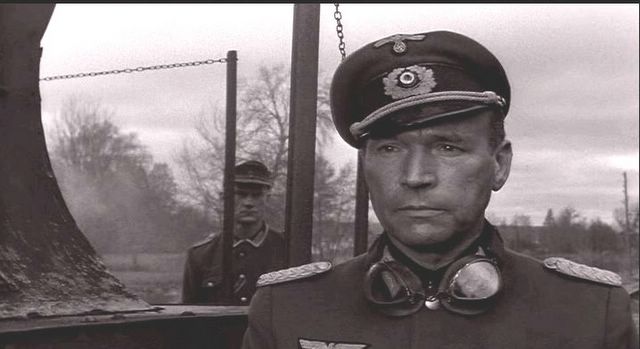
If we had ten times as many men, it couldn't be done


"If we had ten times as many men, it couldn't be done.
It's hopeless Colonel". - - - Major Herren, --The Train.
Posted by Picasa

Okay this is going to be an unusual post, and I may jump around some, but bear with me. I have sort of an artistic bent of mind, anyway.

As my last post noted, I have been reading The Assassins Gate : America in Iraq by George Packer. In it he quotes from an article by Ron Suskind, that originally appeared in the New York Times magazine of October 17, 2004. It was entitiled Without a doubt, and goes on for over 10 pages in the online version. Here is the pertinent excerpt:

“In the summer of 2002, after I had written an article in Esquire that the White House didn't like about Bush's former communications director, Karen Hughes, I had a meeting with a senior adviser to Bush. He expressed the White House's displeasure, and then he told me something that at the time I didn't fully comprehend -- but which I now believe gets to the very heart of the Bush presidency.

The aide said that guys like me were ''in what we call the reality-based community,'' which he defined as people who ''believe that solutions emerge from your judicious study of discernible reality.'' I nodded and murmured something about enlightenment principles and empiricism. He cut me off. ''That's not the way the world really works anymore,'' he continued. ''We're an empire now, and when we act, we create our own reality. And while you're studying that reality -- judiciously, as you will -- we'll act again, creating other new realities, which you can study too, and that's how things will sort out. We're history's actors . . . and you, all of you, will be left to just study what we do.''

And as Packer in his book points out of this: “The way the world now works amounted to a repudiation of reason, skeptical intelliegence, the whole slate of liberal Enlightenment values.”pg.390 (The arrogance,--- stunning.)

Thinking about this, and thinking about what will likely unfold in this year of 2006, I can’t help but think, that at some point the Bush policy in Iraq, of Total Victory, of winning no matter what, of staying the course, which is by considering these accounts a faith-based initiative, is going to run up against the reality based community, or in this case the reality of what's actually happening on the ground in Iraq.

Two areas to consider:

1) The insurgency is still not in its “last throes”. A sort of stasis has developed. The US armed forces and allies can’t really beat down the insurgency. But as long as these troops are in Iraq, the insurgents can’t really take over either. Some retired generals from the US, have in different articles speculated that to actually beat , or end the insurgency, it would take 700,000 troops.

2) From everything I’ve read it sounds like only a miniscule amount of $18 billion set aside, has been spent on the reconstruction efforts in Iraq. Electricity continues to be a problem,and the oil industry limps along.

Right now the policy calls for holding off the insurgency until Iraqi troops can handle this as a security problem, while supposedly we are trying to do reconstruction at the same time.

This is just my humble opinion, but it seems to me, if we were to withdraw from Iraq, then the mostly Sunni based insurgency, would have no other targets to attack except the Shiite based government, and presumably other Shia peoples.
The Shia would be highly motivated at this point , to defend themselves. And they do have their own militias now. The Kurds have there own demarked area, and by all accounts have already a more peaceful place.

On our way out, we could then give the Iraqi government a number of I.O.U.s, saying okay once things calm down, and you agree to reach some accomodation and get serious about doing what's best for your country as a whole, our best reconstruction people will come back, with the UN too, and help you get all your infrastructure up and running.

And if the US just has to have a base in Iraq, we could probably find the Kurds would only be too happy to oblige. Of course leaving the main part of Iraq, would mean leaving Halliburton in the lurch, and no more control over the future of Iraq oil refineries.

Is it worth losing 58 American lives per month on average, and untold wounded, just to maintain our grip on our free market stakes in Iraq?
I guess I am very cynical, but don’t get me wrong, I am sad about fellow Americans that have died in the line of duty.

Meanwhile as I was rereading Suskinds article again, I flashed on the final scene from the John Frankenheimer’s movie The Train, with Burt Lancaster.
The train with plundered French art is derailed at the end, along with hostages on it. The German Col. Von Waldheim is insistent on winning, insists that his soldiers and the hostages start to work on somehow, getting the steam locomotive back on the rails.
And in an emotional scene his adjutant, Major Herren, played by the familiar Wolfgang Preiss, tells him:

“If we had ten times as many men, it couldn’t be done.
It’s hopeless Colonel. "

Well, the present Bush Iraq policy is like that derailed train, and though the Colonel keeps insisting they try to get the train back on the track, its quite evident that its just not happening. At some point reality, as voiced through a Major Herren, or just the facts themselves, will intrude.
In the meantime guess who the hostages to this train ride have been.?

Wednesday, February 08, 2006

Captivating reading.


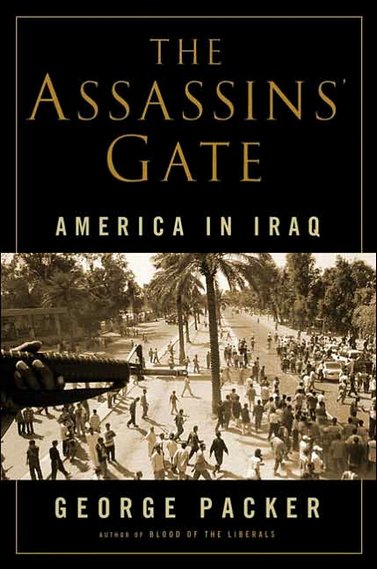
Have been lately reading The Assassins's Gate: American in Iraq, by George Packer.
It is excellent. I have found it hard to put down. Here is part of the editorial review of it from over at Amazon.com :

"How did such lofty aims get so derailed? How did the U.S. get stuck in a quagmire in the Middle East? Packer traces the roots of the war back to a historic shift in U.S. policy that President Bush made immediately after 9/11. No longer would the U.S. be hamstrung by multilateralism or working through the UN. It would act unilaterally around the world--forging temporary coalitions with other nations where suitable--and defend its status as the sole superpower. But when it came to Iraq, even Bush administration officials were deeply divided. Packer takes readers inside the vicious bureaucratic warfare between the Pentagon and State Department that turned U.S. policy on Iraq into an incoherent mess. We see the consequences in the second half of The Assassins' Gate, which takes the reader to Iraq after the bombs have stopped dropping. Packer writes vividly about how the country deteriorated into chaos, with U.S. authorities in Iraq operating in crisis mode. The book fails to capture much of the debate about the war among Iraqis themselves--instead relying mostly on the views of one prominent Iraqi exile--but it is an insightful contribution to the debate about the decisions--and blunders--behind the war. "--Alex Roslin

This is definitely not light reading, but it does illuminate certain things going on over there. To read it and then watch what unfolds on the news , gives one extra texture, about what is happening in Iraq.
Packer writes well, and it reads like a thriller, or a disaster in the making type novel. At the local library here , there is a waiting list, in order to read a copy. I recommend it as a good read on a topic of great current interest. Posted by Picasa

Tuesday, January 31, 2006


A Beautiful song by Stacy Sutherland.

Have transcribed the lyric of ' Nobody to Love' by Stacy Sutherland , which is on the album Easter Everywhere, by the 13th Floor Elevators. This has been another song, where the case has been, the lyrics have not been listed anywhere on the web. Using Wavpad, which allows you to slow down the song, I believe I have ascertained the lyrics the best I could. Stacy's southern Texas drawl is a bit hard to decipher even for a fellow Texan. Yet the song has beautiful lyrics, its a paen to a woman, a girlfriend. She must have been something very special. Okay here are the lyrics:

Nobody to Love

In her eyes they reflect a smile,
cascading to the shore,
and then her words like golden birds,
would love to follow the storm

and then her voice was echoing,
through the night no more,
and I remember all the dreams,
and all the words before

She knew the sun was shining,
She knew the moon was shining,
She knew her eyes were fine with light

She knew the sun would come
and it would shine for us all day,
Burning bright its morning light
would guide us through the day...

Nobody to love,
Nobody to love,
Nobody to love,
Nobody to love,
Nobody to love,
Nobody to love,
Nobody to love,
Nobody to,

Now I face the midnight,
with nobody to love,
I used to leave at twilight,
with nobody to love

She left me in the wilderness... all I had was hope,
She left me only loneliness...each day so cold,
and now ..I have.. no one to hold

She knew the sun would come
and it would shine for us all day,
Burning bright its morning light
would guide us through the day...

Sunday, January 29, 2006

We seem to have problems learning from history, don't we?

Am adding an excerpt from a rather lengthy recent interview with Daniel Ellsberg over at the Daily Kos. http://www.dailykos.com/.
This is just a small excerpt from what looks like a 6 part extensive interview. At this point Ellsberg has been comparing America's Vietnam experience to our involvement in Iraq:

"Q: We seem to have problems learning from history, don't we?

A very sad thing, and it isn't just Americans. When I try to draw lessons from history and pre-history, I've reached some unhappy conclusions about the nature of our species. Not just about Americans or capitalists. And part of it is that our concern for other people is very selective and very easily manipulated by leaders and by propaganda. And people are capable of being very little concerned about masses of deaths and suffering of other people - foreigners, far-away, invisible, not related, different languages, different religions.

They can be led by leaders to be concerned about that, but it's also very easy to distract them from it, into not being very concerned about it at all.
And it's very hard for Republicans to learn from Democrats. And the Vietnamese, I think, didn't learn all that much from having been invaded. They went into Cambodia and didn't really do very well. The Chinese went into Vietnam and got a bloody nose.
The Soviets really reproduced our Vietnam experience in Afghanistan. The only difference is the weather. I must say, that was one case where I wasn't wrong. I looked at that situation very early on when a lot of people were saying the Soviets would not have their one hand tied behind their back. They won't have problems with the press and the public, so now they're going to do it tough, the way the Israelis would do it.
So even despite the fact that they didn't have any of those domestic factors that we did, they didn't do any better and they were just as brutal as we are in Iraq.

Here's another one that didn't turn out as costly for us as I thought it would: our own invasion of Afghanistan. I thought we'd have the same trouble as the Soviets. That really didn't work out, but why not? First of all, the U.S. very much limited its penetration of Afghanistan. It's left almost the whole country, except for Kabul and Kandahar, to the warlords. It hasn't been ambitious at all about controlling most of the country. I didn't expect them to leave it at that. In retrospect, why did they? Because they were preparing for Iraq, which I have to say is another one I didn't foresee particularly. I didn't know about the Project for a New American Century. I didn't know the neo-cons at that point. I don't recall looking at Iraq particularly at all in 2001 or early 2002.

People say, Of course, we don't plan to stay in Iraq. We just plan to stay until there's a democratic government, a democratic government that will ask us to stay in our bases there and which will be friendly to Israel, and assure US that women's rights will be observed and so forth, but above all that the contracts will be recognized that we're signing now for all the deals about oil. We don't have to be there indefinitely, all we need is a government that is friendly in all these respects, as Chalabi promised us.
Well, that's a recipe for staying forever. Even if this administration lets go of all the other conditions, I don't believe they'll give up on the bases and the oil. Nor will its successors, Republican or Democrat. So I think that's what we will be doing, staying forever. Unless the rest of us, outside the government, force change on the leadership of the Democrats as well as the Republicans, which will be difficult and take a long time.

Q:And that's why there's such a resistance to naming a timetable and calling everybody traitors who want a timetable.

Absolutely. Those same words were used to Nixon throughout his time on Vietnam. People were asking him to set a timetable. The weeks that I was copying the Pentagon Papers in October of 1969, a bunch of us at RAND were also putting forth a proposal to get out in one year, by 1970. Nixon was saying, no, no, no, no, that way they'll be able to wait for us to leave and then move in. We can't do that. And he was giving all the arguments that Bush is giving now. In fact, I wonder if Bush has actually opened the old drawers or brought down one of Nixon's memoirs from the shelf or something and simply copied the speeches, because that's what he's saying.
I'm still convinced - though most people aren't - that Nixon didn't mean at all for Saigon to be Communist in 1975 or 1978 or 1980. The reason he was rejecting the notion of having all American troops out by setting a deadline, setting a timetable, was not because he objected to that particular timetable or to having a timetable, but because he had no intention of giving up American presence altogether. Ever.

And that's where I think we are today. What are the secret intentions or plans of the White House, specifically of Bush and Cheney and Rumsfeld? I think it is not their intention or expectation or willingness to see a total removal of U.S. influence and presence in Iraq. Ever. In light of that, I don't think what people need to face up to is what I regard as a likelihood that this war is going to go on much longer than two years or four years or eight years. I think that figures like 30 and 40 and 50 years should be considered. That's what they have in mind. When I say that, I'm not talking just about their hopes or expectations, because of course Nixon had hopeful expectations that were frustrated. I'm talking about intentions that I think may very well be fulfilled by Democrats as well as Republicans, intentions to hold on to bases and oil at all costs. I'm not at all confident that Democrats will be willing to give up those bases.

But the point is people need to start facing up to the fact that when Bush talks about being out of there, he's either lying or being incredibly wishful. Again, we come back to the question, can Bush possibly be persuaded that he really is going to get all he wants and that Chalabi is going to be vindicated in the end? I don't know. I can't figure Bush out, when it comes to his expectations. But I think he is determined to get what he wants, and realistically that won't let him reduce our troops all that much while he's in office."

Q: If, as you've said before, you fear us going into Iran, won't we have to have a draft? Won't that create so much protest they can't move forward with their plans?

No. First of all, the draft didn't stop Vietnam. It went on and on and could have gone on longer. I think we were very lucky in a number of ways that it didn't go on a lot longer. Anyway, it wasn't the draft, it was the large casualties and that was a result of Westmoreland's search-and-destroy missions and attrition strategy. That was known by many of the generals and they weren't willing to take a stand and take responsibility for reining him in on that. They were very critical of his strategy and the great American losses that we were suffering, but they wouldn't tell him not to do it.

If they had stopped that and really changed the strategy and gotten the U.S. casualties down greatly, they could have stayed in Vietnam and they would not have been forced out of it, because Americans are very tolerant of bombing and they're very tolerant of foreigners dying.
Q: And that appears to be Bush's strategy for the next year.
That's what he hopes for.

Q:He's going to go to air power and pull some troops out.
And Americans will go along with that."

So this is from part 5 of the interview: A direct link is:
http://www.dailykos.com/storyonly/2006/1/28/20658/6235

Fascinating reading. Especially for those of us who lived through the Vietnam War and can remember the release of the Pentagon Papers.

Monday, January 23, 2006


A cosmic jellyfish appears to pulse with light in this multi-wavelength image of the Cartwheel galaxy, compiled from images taken by four space telescopes.

Saw this photo from an article on the web at:http://www.newscientistspace.com/article.ns?id=dn8582

It turns out that: "The galaxy probably came by its distinctive shape when a small galaxy – possibly one of the objects at bottom-left of the image – collided with it head-on 100 million years ago. The crash set off ripples in the large galaxy's gas that led to concentric rings of star birth."

Astronomers dated this star formation by studying the wavelengths of light emitted by each region of the galaxy. This image represents those wavelengths by colour, with purple representing X-rays measured by the Chandra Space Telescope, blue representing ultraviolet light measured by the GALEX spacecraft, green representing visible light observed with the Hubble Space Telescope, and red denoting infrared light recorded by the Spitzer Space Telescope.
Calm after the storm
The outer ring, which is wider than our galaxy, the Milky Way, reveals the youngest wave of star formation because it shines in high-energy X-rays and ultraviolet light. "Usually a galaxy is brighter toward the centre, but the ultraviolet view indicates the collision actually smoothed out the interior of the galaxy, concentrating older stars and dust into the inner regions," says Appleton. "It's like the calm after the storm of star formation."

Recently, astronomers also discovered the galaxy does not end at its outer ring. Using the GALEX spacecraft, they found a faint disc (not visible in the image) that stretches two times as far as the ring, making the Cartwheel 2.5 times as large as the Milky Way."

I thought the image of the Cartwell galaxy was cool and intriguing. We tend to get so down to earth, and fixiated of life on this planet , while meanwhile there are galaxies like this radiating cosmic beauty on a vast scale. Wow.


Posted by Picasa

Thursday, January 19, 2006

Charlie Milam Pinkston, my Great Grandfather

Charlie Milam Pinkston was born June 3rd, 1851 in Dothan, Alabama. He was my Great Grandfather. In 1861 he would have been 10 years old, and in 1864 13 years old. Since his father was called up to serve in the Alabama 45th Infantry Regiment in early 1864, it would appear he , Charlie, never even served as a drummer boy. Indeed, once his father , Henry B. Pinkston, was called up, he would be the eldest male in his family, so that would probably explain why he was not called.

Back in the 1850s, Dothan was then called Poplar Head, and was a small pioneer settlement located near a spring. Settlers back then made a living by cutting down pines for lumber, growing cotton and corn, keeping pigs and other livestock.

So he grew up most likely as a farm boy, in an area of southeast Alabama which along with parts of southern Georgia is known as Wiregrass Country. Wiregrass is a tall grass, which in this area among other things can harbor a good number of rattlesnakes.

In the 1860 Census for Macon County, Alabama, Charlie shows up as an 8 year old, with parents Henry and Melissa Pinkston and with 3 siblings. At this time period it would likely be two brothers and one sister.

Sometime after the Civil War ended, and before the census of 1870, the whole family must have moved to Winn Parish , Louisiana, as that is where the entire family is listed in 1870. Specifically, they are listed as being in the town of Winnfield, in Winn Parish.

This time period was one of turmoil in the South, as Reconstruction was still in effect, and the South was still trying to recover from four years of warfare.

Why would Henry B. Pinkston and family head here during this time? Well, here is what S.Harper in an 1936 article about Winn Parish says about this time: "As I have already stated the Civil War left this country in a demoralized condition. Thousands of families abandoned their homes and went west, and on account of such a vast amount of public land, upon which a man could build himself a house, clear land for cultivation, and avoid paying any taxes, land really had no value. The hundred of thousands of acres of land that had been entered before the Civil War and abandoned after the war, had been adjudicated to the state for taxes. Thousands of families moved on such adjudicated land, built homes, cleared land, and thereupon lived. " http://ftp.rootsweb.com/pub/usgenweb/la/winn/history/harper.txt.

So clearly the vast amount of public land, freely available would have been an attraction. In a second article from 1939 Mr. Harper goes on to recount: " Now, I wish to give a little history of the advantages the pioneers and youth of the old days gone by had over the youth of today. In those pioneer days the range was good the whole year around. The cane covered not only the swamps but the hills as well. This certainly was a fine stock country. Fat beef was plentiful during the winter months as well as summer. The hog range was excellent. Beef was considered second class meat instead of first class as now. Home made pork sausage could be found in nearly every smoke house. Venison was a very common meat, for deer were killed to get rid of them rather than for meat. Squirrels, likewise, were killed to get rid of them. No one thought of game laws, posting of anyone's land, or hunting license. Fish were plentiful. No limit to number of deer, ducks, squirrels, turkeys or fish one might kill or catch. One of the best things for the pioneer family was a tract of land for a home. At the beginning one could settle on a tract of land, blaze it out and then enter it for $ 1.25 per acre from the United States Government. One could enter as much as he wished if he had the money. Later, the homestead law was passed when one could homestead 160 acres for $ 15, live on it as many as seven years before having to prove settlement which could cost some $ 15 more which made total cost of 160 acres about $ 30. There were no taxes on a homestead 'till patent was issued. If one could find a tract of state land he could get 160 acres of state land for twelve and one-half cents an acre, thereby become the owner of 320 acres for not more than $ 55.00. "

In the same year 1870, the Winn Parish census indicates a young Ida Goff was living with her step-father William Henderson Smith, and her Mom, Columbia Goff who had remarried after her husband James L. Goff of the 31st La. Inf. Rgt, had died from disease in July 1862, shortly after joining in May 1862. Within a few years young Ida,(b. 25 Mar 1858) whom according to family legend had red hair, would go on to marry Charlie Milam at a young age.

From Charlie’s Masonic lodge obituary we find that he married in Mississippi. Ida’s parents were originally from there, so that may have something to do with this. At any rate by 1874 , Ida and him must have married and been busy because their first child, Alonzo (Lonnie) was born on the 25th of June, 1874. Charlie would have been 23 that year, and Ida would have been 16 years old. The age of consent would have been much lower back then. So maybe she married when she was 15. Hard to say until marriage records from the 1870s become available someday.

Quite likely they had a farm and homestead there in Winn Parish. The next child they had Atticus Lafayette Pinkston was my paternal Grandfather. He was born April 1, 1878. Family legend also says the Ida was of French descent, so that, along with living in Louisiana may account for the “Lafayette” middle name. They would go on to have four more children together, Grover, Ida, Ella, and Charlie Milam Jr.

The 1880 census shows them as being a household in Winnfield. But by then, Charlie’s father Henry B., is shown for 1880 as being over in Panola County, Texas.

By 1886 , Charlie M. shows up on a Tax record for Shelby county, so by that time he must have moved from Louisiana, to Texas. Then in 1887, Jan. 2, 1887 to be precise, Henry B. died. A few months later his wife, Cattomie "Kate" Pinkston died on the 11th of March in 1887. She was only 44 at the time, and her youngest child with Henry B., Pearl, was just 5. This must have been a stressful time for both families.

Since the 1890 census does not exist it is hard to say much about these years, except from other papers , there is indication that Charlie, and Ida owned the Logansport ferry which crossed the Sabine River at a place just east of Joaquin, Texas.

Then on the 21st of February 1891, Ida died. She was just short of being 33. According to my father, this was very hard on Atticus who was 13 at the time. When Charlie went on to remarry to Mattie Wagstaff on Nov. 5, 1893, Atticus could just not get along with his new stepmother. He eventually went to live with a Doctor Lock in Center, Texas.

Charlie, and Mattie together, had a son David Douglas on April 26, 1896. However, Mattie then died 4 days later on May 1, 1896. One can speculate that it may have had something to do with an after effect of the childbirth. She was only about 22 years old.

Nine years later on May 5, 1905, Charlie would marry for the third and final time, to Mollie Baker, who was originally from Bear Creek, MO. She would have been 29 at the time, and he was 54.

However, in the 1910 census Charlie is shown living in the household of his daughter Ida, who by then was married to William David Whiddon . Mollie is not listed as being there, so presumably they were no longer together. In this census he is listed as a fisherman.

At this point I will go ahead and insert further information from the Masonic Obituary of Sept. 8, 1920. :

“He joined the Baptist Church when he was a young man but later in life united with the Christian church, of which he was a member until his death. Uncle Charlie, as he was familiarly known by his friends, was made a Mason at an age when most men are in their dotage, yet such was his rugged health and powers of endurance that until he was stricken with the malady which caused his death, he was mentally and physically fit, able to do a hard days work and feel none the worst for it.

He died at the home of his daughter, Mrs. A.J. Truitt of Joaquin, Texas, June 18, 1920, aged seventy years and fifteen days.”

Charlie’s life then, spanned an interesting period of the American South. He was 10 when the Civil War began, and undoubtedly saw the effects of the war in Alabama, and his father returning on parole in May of 1865, after having had become a prisoner of the Union forces. He would have experienced the Reconstruction period in Louisiana, and then the technical progress of the Gilded Age while living in Texas. In all he had 5 sons, and two daughters. And he must have known much heartbreak after seeing two wives of his die, while they were still quite young.

About his schooling, or what he may have read, or any letters, that is unknown to me his Great Grandson. This has been a reconstructed biography using what facts and knowledge of circumstances I could obtain. May he rest in Peace, and of course his ancestors are thankful for his efforts.

Tuesday, January 17, 2006

Creepiness factor in an Age of Anxiety


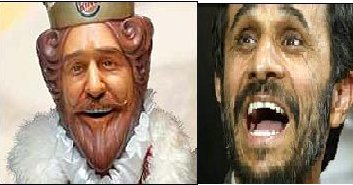
Watching some of the playoffs, it was apparent that BK is going to be a sponsor during the Super Bowl, which means we'll all be seeing a lot more of the creepy BK guy. If you do a Google search under creepy Burger King guy, you'd be amazed at what comes up.

He creeps a lot of people out. Besides from doing the Icky shuffle. Ick. One of the factors is, the combination of him wearing robes, supposedly kingly, which look more like Little Lord Fauntleroy , with the King mask of an aging guy with a beard. And as they would say in the old Firesign Theatre: Those eyes! Weird!

But the BK guy is merely a concoction of some PR firm hired by Burger King, which is owned by a British corporation. So he is merely creepy.

In this era now, we also have Mahmood Ahmadinejad, who really is creepy.

If your an Israeli, first, as in last October, he tells you Israel should be wiped off the map. Then he says there was no Holocaust, or that he doesn't know if there really was such a thing or not. Then he suggests Israel be moved, I guess lock, stock and barrel, to Europe or Alaska. Recently he wants to start enriching more uranium, which by the way, is what you need to make a nuclear bomb.

And the latest from Mahmood is that it is the West that is Medieval.
And this from a guy who wants more separate mens and womens elevators to be built in Tehran.

Unfortunately, everything he does is like gift wrapped present for "W", and the Neocon crowd. But , if you live in Israel he must, at the minimum, give you the creeps. The dude is serious. Just adding to the creepiness factor of the world.

Me thinks him, and the BK guy, and Pat Robertson need to get together and share some scenes. Selah.Posted by Picasa

Friday, January 13, 2006

Murtha and Common sense on Iraq

Saw this post over at Huffington Post today. Am placing it here in toto, sense it is a statement by a congressman:"

Situation in Iraq Is Civil War

According to the Random House Unabridged Dictionary, Second Edition, the definition of a civil war is a "war between political factions or regions within the same country." That is exactly what is going on in Iraq, not a global war on terrorism, as the President continues to portray it. 93 percent of those fighting in Iraq are Iraqis. A very small percentage of the fighting is being done by foreign fighters. Our troops are caught in between the fighting. 80 percent of Iraqis want us out of there and 45 percent think it is justified to kill American troops. Iraqis went to the polls in droves on December 15th and rejected the secular, pro-democracy candidates and those who the Administration in Washington propped up. Preliminary vote results indicate that Iyad Allawi, the pro-American Prime Minister, received about 8 percent of the vote and Ahmad Chalabi, Iraq's current Oil Minister and close associate of the U.S. Iraq war planners, received less than 1 percent. According to General Vines, the top operational commander in Iraq, "the vote is reported to be primarily along sectarian lines, which is not particularly heartening." The new government he said "must be a government by and for Iraqis, not sects." The ethnic and religious strife in Iraq has been going on, not for decades or centuries, but for millennia. These particular explosive hatreds and tensions will be there if our troops leave in six months, six years or six decades. It is time to re-deploy our troops and to re-focus our attention on the real threats posed by global terrorism."

As I pointed out in a post back during the summer, a reading of books on the history of Iraq reveals that the Sunnis, the Shia, and the Kurds, have all been living in this area for good or ill, for the last 900 years. It is the March of Folly(cf. Tuchman) to think that US Military can get them to get along any better than they have been getting along over the span of a millennia.

Now the Neocons may have dreams of an Iraq safe for Halliburton, Bechtel, and US oil companies, but it looks like by voting for the Islamic list, the Iraqis have their own ideas about what they want to see happen in their own country.

And once US troops finally do leave they can hardly be targets for Al- Zarqawi and his suicide bombers. In other words if 45 % of the Iraqi public think it is okay to kill US troops, Iraq just may not be the place to fight Al-Qaeda, or the Jordanian mishmosh version of it.

Sunday, January 08, 2006

More Lyrics; Jupiter in Gemini

Among other things, astrologically speaking I have Jupiter in Gemini, which means my mind jumps around to a lot of different things or subjects.

Likewise this blog; if the subject changes or my posts are all over the map;well thats just the way it goes. As T.S. Eliot mentioned, these are shards stored against my ruins, etc.

Anyway, am going to post more lyrics from Bull of the Woods. The project began when I discovered that no matter how much you search, most of the lyrics to the songs on it had not been put up on the web anywhere, til moi got around to it. A correctal project as it were.
Here are the lyrics to With You, an unusual song in 3/3 time. I sort of like it:
With You

Dreams are told bout people around you,
If you should watch them they soon will astound you,
I know a guy who said he felt threatened,
Said he dreamed nice things when you was around him

Dreams, dreams,
can't help but believe him
Dreams, dreams,
can seesaw beneath him

How do you play there ....many mind
How do you play there....many mind

Living in trust is what we should strive for,
speak not the truth and soon you'll be called for,
Some day is coming and soon I'll be asking,
Ready yourself for love everlasting

wind, rain,... sun and sea,
cannot keep... your love from me,
all these things... were meant to be

Dreams, dreams,
can't help to believe me,
Dreams, dreams,
in seesaw bequeathing,

How do you play there.... many mind


cf also: 13th Floor Elevators

Saturday, January 07, 2006

Heavens Gate or Senile Dementia Now


Heavens Gate or Senile Dementia Now

Back in November when Pat Robertson condemned the good people of Dover, PA, to God's Wrath simply for choosing different school board members in an election, I saw this photo of Pat, and the look on his face reminded me of Marshall Applewhite, him of Heavens Gate fame, who is presumably on the Hale-Bopp comet, by now on the edges of the solar system.

Well, Pat is getting really out there. As noted many places,among which the New York Times:"
The Protestant broadcaster Pat Robertson suggested Thursday that Ariel Sharon's stroke was divine punishment for "dividing God's land."

"God considers this land to be his," Mr. Robertson said on "The 700 Club," his television program. "You read the Bible and he says, 'This is my land,' and for any prime minister of Israel who decides he is going to carve it up and give it away, God says, 'No, this is mine.' "

But he also said that in the Bible, the prophet Joel "makes it very clear that God has enmity against those who 'divide my land.' "
Mr. Sharon "was dividing God's land, and I would say woe unto any prime minister of Israel who takes a similar course to appease" the European Union, the United Nations or the United States, Mr. Robertson said.

Well, it looks like Pat has become Gods personal spokesman.
As Yahoo News noted: "
Pat Robertson Imagines God as a Petty, Clownish Thug".

What Pat failed to take note of was that Israel was pretty much carved up right after the 1947 war. Ariel Sharon had very little to do with that.
Subsequent wars have seen subsequent shifts in boundaries.

I mean, just this part of Robertsons reasoning doesn't bear up to any fair analysis. Me thinks, and a lot of other Americans already think, that in Robertsons case we are beginning to see senile Dementia setting in.
Wonder what Pat will say if a new comet shows up. Strange days indeed, as John Lennon once sang.
Posted by Picasa

Friday, January 06, 2006

New Year: new times along the coast

Well, have been remiss about posting anything. The days after Xmas everything just sort of slows down, including yours truely.

The lastest Rolling Stone has an article about how Bush, filled FEMA with cronies all throughout the agency . It can be read over at;
Looting Homeland Security : by Eric Klinenberg and Thomas Frank.

The really interesting part for me among many is:

"Everybody knew that if there was a Category 5 hurricane potentially hitting New Orleans, the state and local governments would be overwhelmed," says Jane Bullock, the former FEMA chief of staff who served for emergency management from 1995 to 2001.. "It would have been useful to have FEMA there, counseling less-experienced officials on how to respond."

Instead, FEMA sent only one staff member to New Orleans before the storm -- Marty Bahamonde, a regional director from the Boston office whose previous responsibilities were in public affairs. The agency also failed to deliver the vital resources it had routinely supplied in the past: power generators, potable water and ice, emergency-communications systems, medical teams to support local hospitals, search-and-rescue teams to locate and assist survivors. The result was catastrophic: thousands of people stranded without water and food; thousands more huddling for days in the dim, stinking Superdome; hospital patients baking to death; nursing-home residents abandoned and drowned.

"Just look at the generators," says Bullock. "We've all read horror stories about people dying in hospitals because their fuel for generators ran out. But it's easy to bring in generators with military helicopters if the roads are blocked. It's astounding to me that this didn't happen. Or the Convention Center -- the government could have flown in water and food immediately. Those people didn't have to be stuck like that. There was no one on the ground with experience in disasters. I don't think Brown knew what to do."

As the disaster unfolded, Bahamonde frantically tried to impress the seriousness of the situation on Brown. "Sir," he e-mailed his boss on August 31st, "I know that you know the situation is past critical. Here are some things you might not know. Hotels are kicking people out, thousands gathering in the streets with no food or water. Hundreds still being rescued from homes . . . Estimates are many will die within hours . . . We are out of food and running water at the dome . . ."
Brown's reply: "Thanks for update. Anything specific I need to do or tweak?"

Well, this article is a real eye-opeaner. Moreover, right after this Bush tried to appoint a crony, Harriet Miers whose qualfications was, she was his lawyer, to the Supreme Court, and then recently over the December recess he went around the Congress to appoint a crony, Julie L. Myers to head the U.S. Immigration and Customs Enforcement. Her husband, John Wood, is Chertoff's chief of staff now, and her uncle, Richard Myers, recently retired as the chairman of the Joint Chiefs of Staff at the Pentagon.

So Bush keeps appointing cronies, totally oblivious to professional qualifications . So it goes.